You run a Shopify store and you check three rival sites every morning, copying prices into a spreadsheet before your first coffee. By the time you finish, a competitor has already dropped a price and stolen the sale. This is the daily grind competitor price monitoring for online shops is meant to end. This guide explains how automation does the watching for you, so you can spend your hours on products and customers instead of manual admin.
A quick, honest note first. We were unable to pull fresh, verified statistics for this article, so we will not invent numbers, tool names, or citations. Instead, this piece explains how the systems work in plain terms. Treat it as a working overview, not a stat-backed report.
The Real Problem With Manual Price Checking
Most small shop owners track competitors by hand. You open a few tabs, scan product pages, and note who is cheaper. It feels productive. It is not.
Here is why manual checking quietly costs you money:
- It is always out of date. Prices change during the day. Your morning snapshot is stale by lunch.
- It does not scale. Tracking 5 products across 3 rivals is possible. Tracking 500 products across 10 rivals is not.
- It steals your best hours. Admin like this eats the time you should spend on marketing, sourcing, and customers.
The core pain is not that you lack data. It is that gathering it by hand is slow, and slow response loses sales. Automation exists to remove that manual step entirely.

How Automated Price Monitoring Actually Works
Strip away the jargon and the process is simple. An automated system repeats the exact steps you do by hand, but constantly and without tiring.
- You define what to watch. You list your products and match them to the competitor pages that sell the same or similar items.
- The system collects prices. On a set schedule, it visits those pages and reads the current price, stock status, and sometimes shipping cost.
- It compares against your prices. The tool lines up each rival price next to yours and flags gaps.
- It alerts you or acts. You get a notification, or the system updates your own price within rules you set.
The key word is rules. You stay in control. You might tell the system: never go below cost, always stay within a small margin of the lowest rival, or simply alert me when someone undercuts me by more than a set amount. The machine follows your logic; it does not guess.
What You Can Automate Beyond the Price
Price monitoring rarely lives alone. Once data flows in automatically, the same setup can drive other repetitive tasks. That is the point of a whole-business approach: connect the pieces so one trigger handles the follow-through.
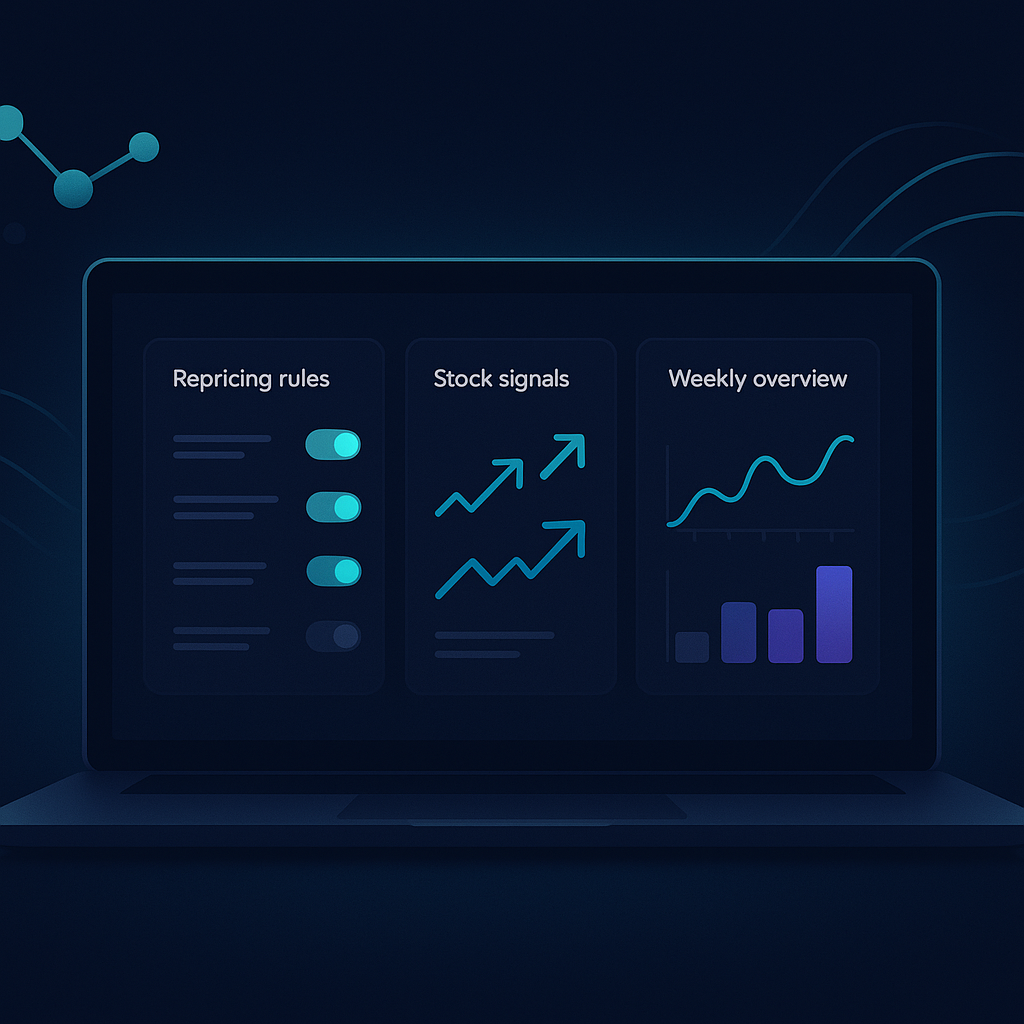
- Repricing rules. When a competitor drops a price, your listing can adjust inside safe limits you approve.
- Stock and availability signals. If a rival sells out, that may be your moment to hold or raise price, and the system can surface it.
- Reporting. Instead of building a weekly spreadsheet, you receive a clean summary of where you sit against the market.
- Alerts to the right person. The system pings whoever owns pricing, so nothing waits in an inbox.
Each of these is a task you already do by hand. Automating them frees the same hours you now lose to admin, which is exactly the problem small shop owners feel most.
Choosing an Approach That Fits a Small Shop
You do not need an in-house tech team to run this. That is the biggest myth stopping small owners from starting. Two broad paths exist.
Off-the-shelf tools. Many platforms offer price-tracking as a subscription. They are quick to switch on, but you configure and maintain them yourself, and they may not connect to the rest of your workflow.
Done-for-you automation. Someone builds the system around your actual store, your products, and your rules, then keeps it running. This suits owners who have no time and no technical staff, because the setup and upkeep are handled for you.
A sensible way to begin, whichever path you pick:
- Start with your top 20 products by revenue, not your whole catalogue.
- Pick 2 or 3 genuine competitors, not everyone who sells anything similar.
- Set clear repricing rules before you automate anything, so the system never makes a decision you would not.
- Review the results weekly for the first month, then trust the process.
Start small, prove it works on your best sellers, then widen the net.

Bringing It Together
Manual price checking is a tax on your day. It is repetitive, easily outdated, and it pulls you away from the work that grows your shop. Automated competitor price monitoring for online shops removes that tax. It watches the market, applies your rules, and hands you clean information or acts within limits you set. The result is faster response, fewer lost sales, and hours returned to you.
If you want to stop copying prices into spreadsheets and let a system handle the watching, that is exactly the kind of whole-business automation we build.
Ready to see this working in your business?
See how we can automate price monitoring for your shop