You run a Shopify store, and every Monday you wonder why a rival’s flash sale pulled your customers away over the weekend. You found out too late. That gap between their promo and your response is where margin and market share leak out. Ecommerce competitor promotions tracking closes that gap — and with the right automation, it stops eating your time.
Here’s the honest part first: we could not verify fresh statistics or name specific tools for this guide through research this time. So this piece stays grounded in what’s practical and repeatable, not invented numbers. Everything below is method, not made-up proof.
What competitor promotions tracking actually means
At its core, tracking means knowing three things about your rivals: what they’re selling, at what price, and under what offer — as those things change. A competitor’s price is a snapshot. Their promotion is the story: a bundle, a coupon, free shipping over a threshold, a limited-time discount.
For an online shop, the useful signals are simple:
- Price changes on products you both sell
- New promo codes or sitewide sales
- Free-shipping thresholds and their timing
- Bundle offers and gift-with-purchase deals
- How long a promotion runs before it ends
If you only check manually, you catch the big ones and miss the quiet ones. The quiet ones — a competitor dropping their free-shipping floor from $75 to $50 — often move the most orders.
Why manual tracking fails small teams
Most store owners track competitors in a spreadsheet, checking sites by hand once a week. This breaks for a clear reason: promotions move faster than your check-ins. A weekend sale can start Friday night and end before you open the tab Monday.
Manual tracking also costs the thing you have least of — time. An hour a day across ten competitors is five hours a week you’re not spending on products, customers, or growth. And accuracy drops when you’re tired or busy. You copy the wrong price. You forget which store had the coupon.
The deeper problem is speed of response. Even when you spot a rival’s promotion, reacting means updating pricing, launching a counter-offer, and telling your customers. Do that by hand and you’re always a day behind.
How automation changes the picture
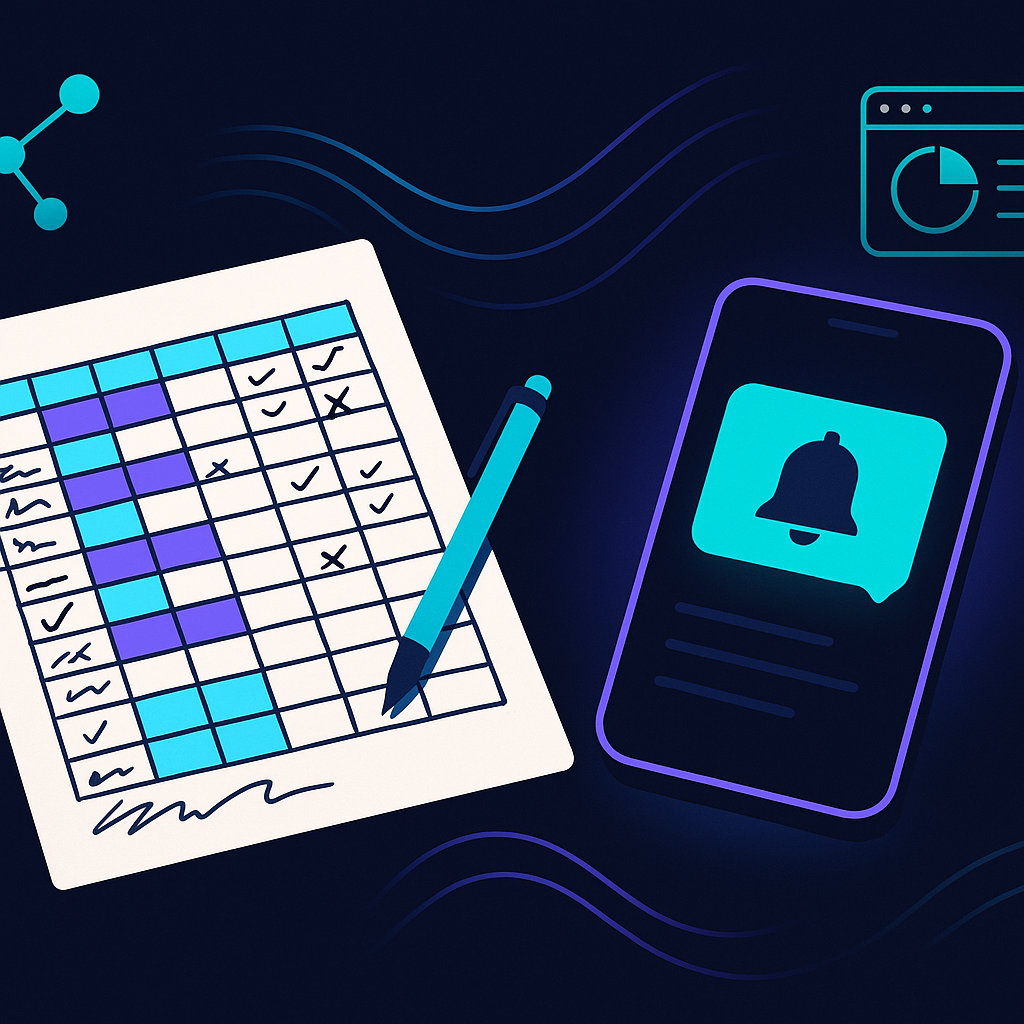
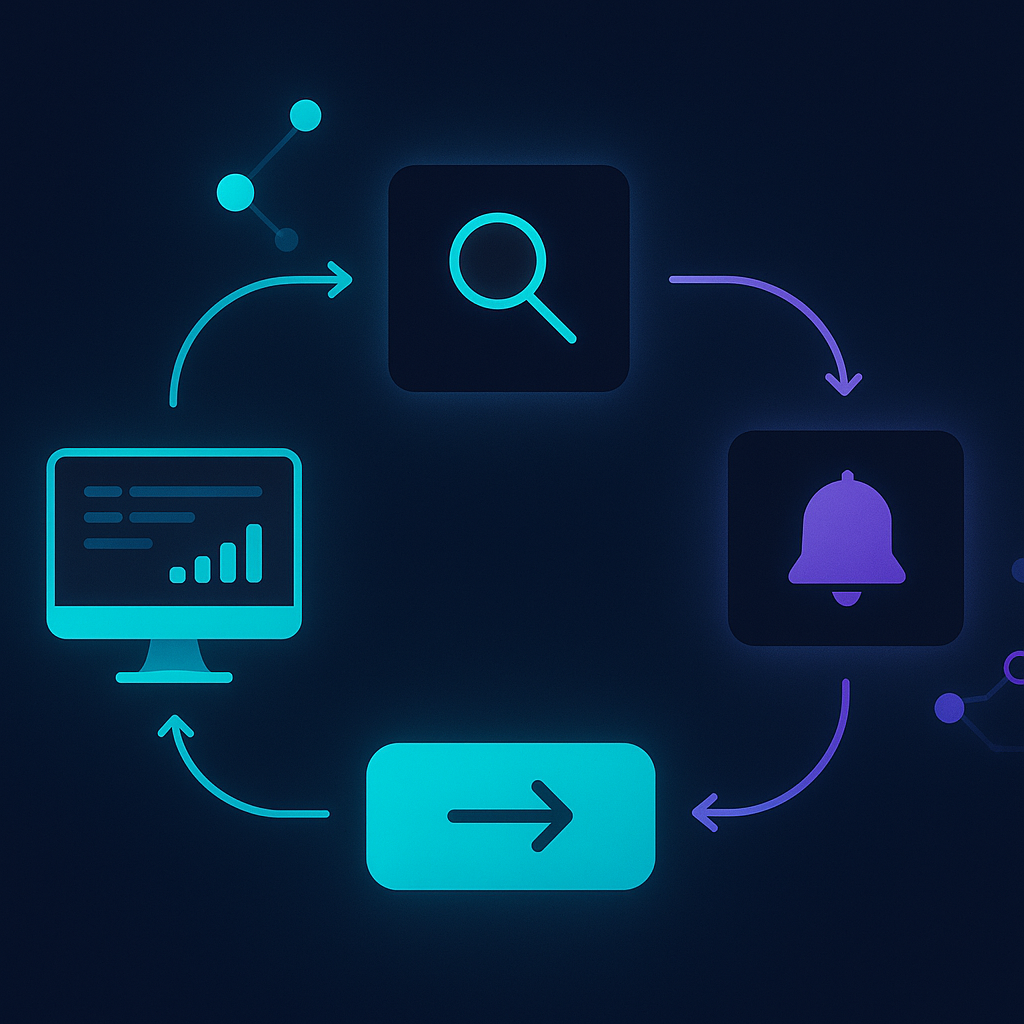
This is where a whole-business automation approach earns its place. Instead of you watching competitors, a system watches them and tells you what changed. The pattern looks like this:
- Monitor — an automated check runs on your competitors’ product and promo pages on a schedule you set, not once a week when you remember.
- Detect — the system flags meaningful changes: a price drop, a new code, a shipping-threshold change.
- Alert — you get a clear summary in the channel you already use, like email or a chat message, not a dashboard you have to log into.
- Act — the alert connects to your next step: a draft counter-promotion, a pricing update, or a note to your marketing calendar.
The point isn’t a fancy screen full of charts. The point is that the watching, comparing, and flagging happen without you. You keep the decision; the machine does the admin. That’s the difference between data and a done job.
A starter setup you can actually run
Start small and honest. You don’t need to track everyone.
- Pick 3–5 direct competitors. The ones who sell what you sell to the same buyer. More than five and you’re back to noise.
- Choose 10–20 hero products. Track the items that drive most of your revenue, not your whole catalog.
- Define what counts as a change worth an alert. A 2% price wiggle isn’t news. A new sitewide sale is.
- Decide your response rules in advance. Example: “If a rival beats our price on a hero product by more than 10%, flag it for review the same day.” Rules mean you react in minutes, not after a meeting.
- Route alerts to one place. One inbox, one channel. Scattered alerts get ignored.
Once that runs reliably, you widen it — more products, more competitors, tighter response times. Automation scales without adding hours to your week. That’s the whole idea behind automating everything: the system grows, your admin load doesn’t.
Turning tracking into an advantage
Tracking for its own sake is just watching. The advantage comes from what you do with the signal. When a competitor launches a promotion, you now have options you didn’t have when you found out late:
- Match or beat it on a targeted set of products
- Counter with a different offer — a bundle instead of a discount
- Hold your price and lean on service, speed, or stock the rival lacks
- Simply do nothing, knowingly, because it doesn’t threaten your margin
The best outcome is often restraint. Knowing a rival’s sale is small and short lets you skip a panic discount that would have cut your profit for no reason. Good tracking protects margin as much as it wins sales.
For an online shop with no in-house tech team, this is the realistic path: let automation handle the constant watching, keep the judgment for yourself, and turn competitor moves from surprises into decisions you make on your own schedule.
Want to see how competitor tracking and the rest of your store’s admin could run on autopilot? Let’s map your setup and put the watching, alerting, and follow-up on automation — so you get your week back.
Ready to see this working in your business?
Book a free automation walkthrough for your store