Blog · Automate Everything
Home / Automate Everything / August 5, 2026 · 5 min read

Track competitor promotions and keep sales moving | Anthropos

Ecommerce Competitor Promotions Tracking: A Starter Guide for Online Shops

You run a Shopify store, and every Monday you wonder why a rival’s flash sale pulled your customers away over the weekend. You found out too late. That gap between their promo and your response is where margin and market share leak out. Ecommerce competitor promotions tracking closes that gap — and with the right automation, it stops eating your time.

Here’s the honest part first: we could not verify fresh statistics or name specific tools for this guide through research this time. So this piece stays grounded in what’s practical and repeatable, not invented numbers. Everything below is method, not made-up proof.

What competitor promotions tracking actually means

At its core, tracking means knowing three things about your rivals: what they’re selling, at what price, and under what offer — as those things change. A competitor’s price is a snapshot. Their promotion is the story: a bundle, a coupon, free shipping over a threshold, a limited-time discount.

For an online shop, the useful signals are simple:

  • Price changes on products you both sell
  • New promo codes or sitewide sales
  • Free-shipping thresholds and their timing
  • Bundle offers and gift-with-purchase deals
  • How long a promotion runs before it ends

If you only check manually, you catch the big ones and miss the quiet ones. The quiet ones — a competitor dropping their free-shipping floor from $75 to $50 — often move the most orders.
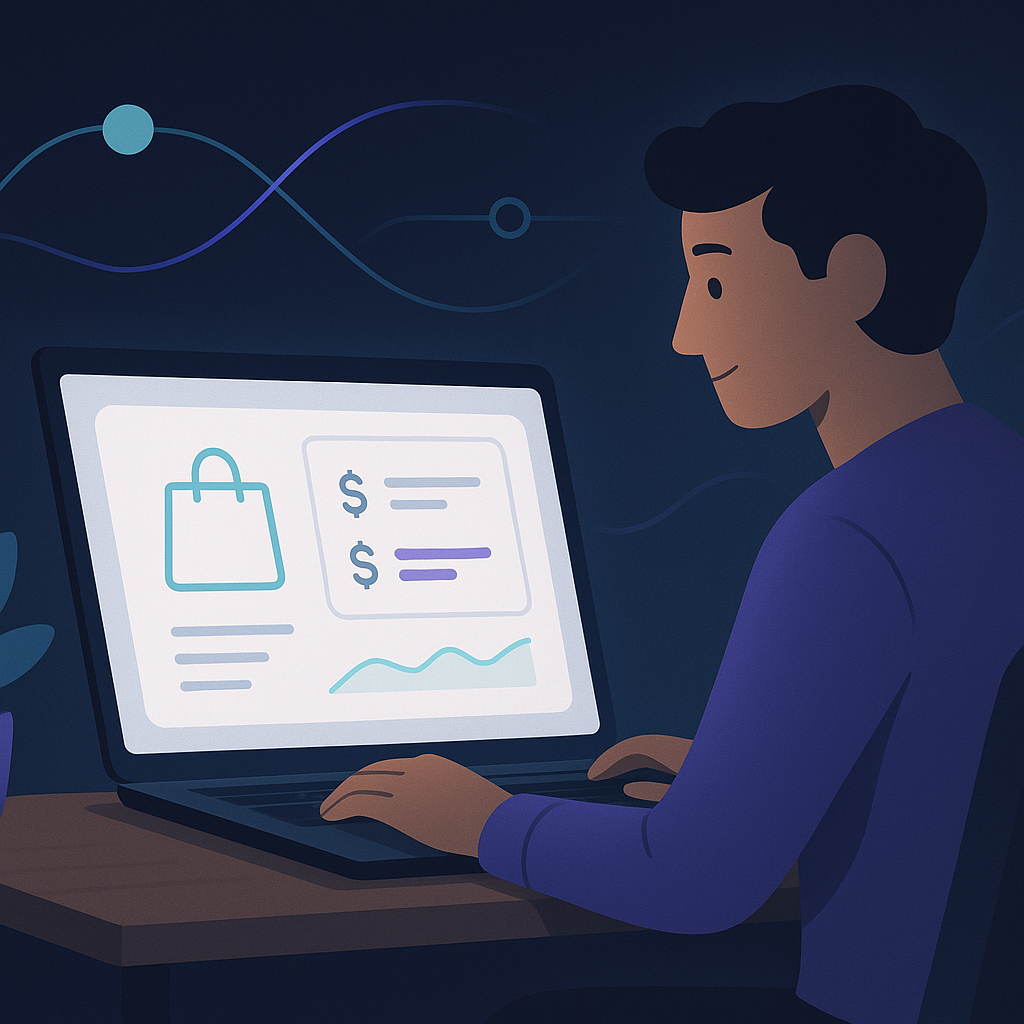
A calm online store owner at a laptop viewing a clean competitor price comparison, warm modern workspace

Why manual tracking fails small teams

Most store owners track competitors in a spreadsheet, checking sites by hand once a week. This breaks for a clear reason: promotions move faster than your check-ins. A weekend sale can start Friday night and end before you open the tab Monday.

Manual tracking also costs the thing you have least of — time. An hour a day across ten competitors is five hours a week you’re not spending on products, customers, or growth. And accuracy drops when you’re tired or busy. You copy the wrong price. You forget which store had the coupon.

The deeper problem is speed of response. Even when you spot a rival’s promotion, reacting means updating pricing, launching a counter-offer, and telling your customers. Do that by hand and you’re always a day behind.
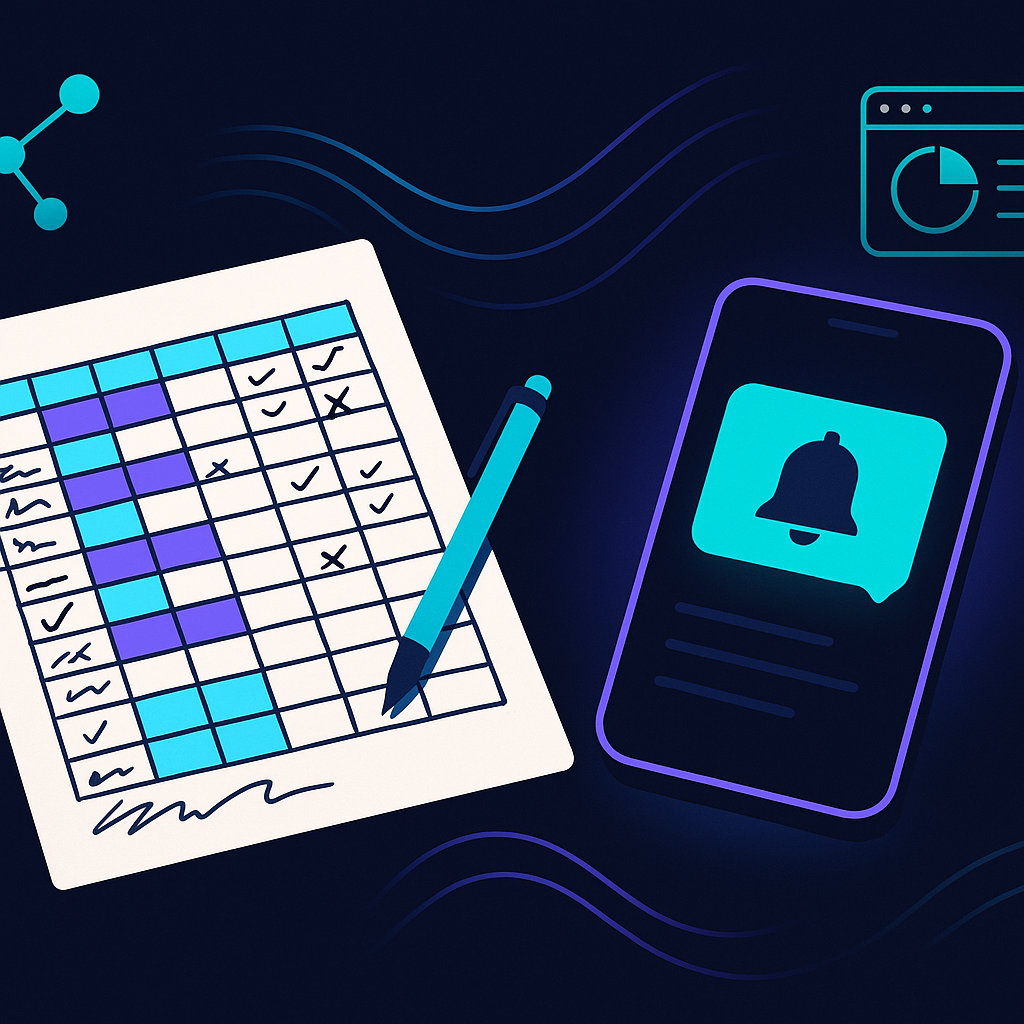
Flat-lay of a cluttered manual tracking spreadsheet versus a tidy automated alert on a phone, contrast composi

How automation changes the picture

This is where a whole-business automation approach earns its place. Instead of you watching competitors, a system watches them and tells you what changed. The pattern looks like this:

  1. Monitor — an automated check runs on your competitors’ product and promo pages on a schedule you set, not once a week when you remember.
  2. Detect — the system flags meaningful changes: a price drop, a new code, a shipping-threshold change.
  3. Alert — you get a clear summary in the channel you already use, like email or a chat message, not a dashboard you have to log into.
  4. Act — the alert connects to your next step: a draft counter-promotion, a pricing update, or a note to your marketing calendar.

The point isn’t a fancy screen full of charts. The point is that the watching, comparing, and flagging happen without you. You keep the decision; the machine does the admin. That’s the difference between data and a done job.
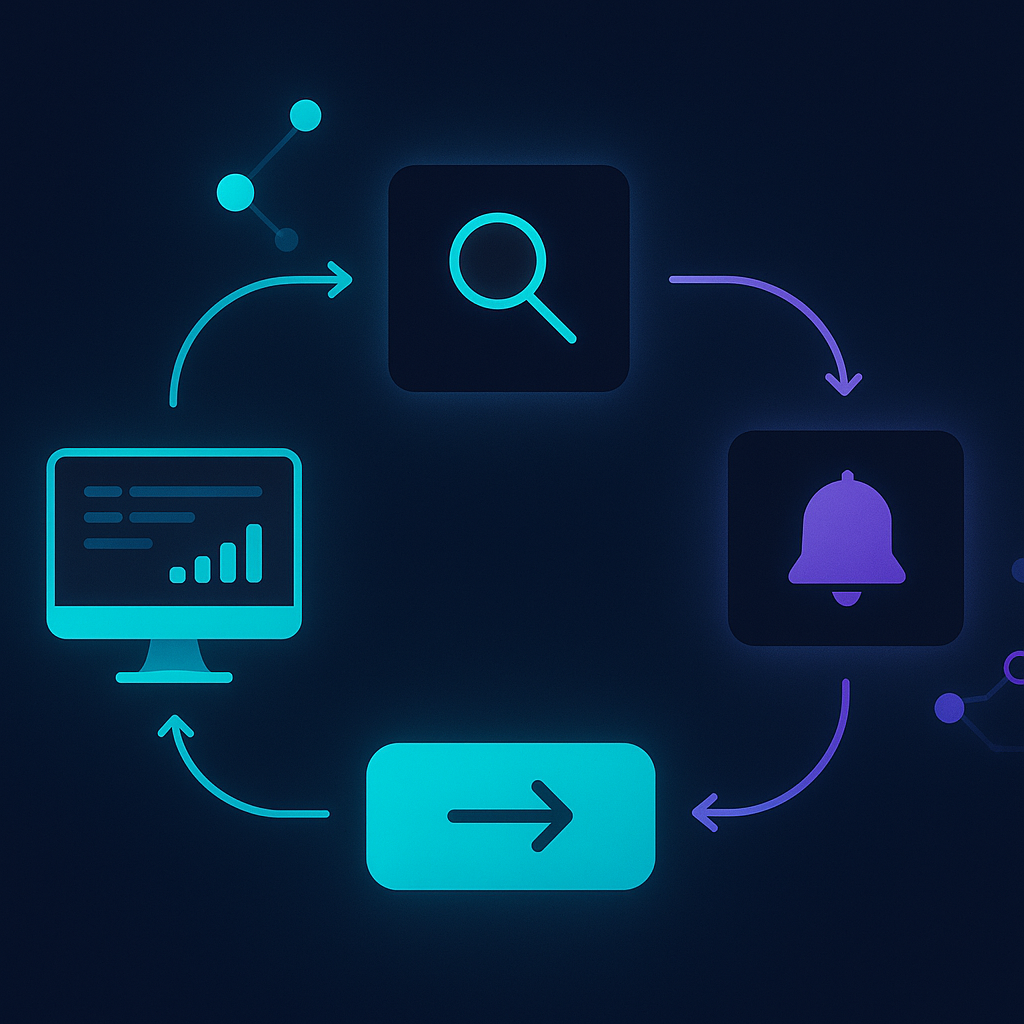
A simple flow diagram showing monitor, detect, alert, act steps in soft brand colors

A starter setup you can actually run

Start small and honest. You don’t need to track everyone.

  • Pick 3–5 direct competitors. The ones who sell what you sell to the same buyer. More than five and you’re back to noise.
  • Choose 10–20 hero products. Track the items that drive most of your revenue, not your whole catalog.
  • Define what counts as a change worth an alert. A 2% price wiggle isn’t news. A new sitewide sale is.
  • Decide your response rules in advance. Example: “If a rival beats our price on a hero product by more than 10%, flag it for review the same day.” Rules mean you react in minutes, not after a meeting.
  • Route alerts to one place. One inbox, one channel. Scattered alerts get ignored.

Once that runs reliably, you widen it — more products, more competitors, tighter response times. Automation scales without adding hours to your week. That’s the whole idea behind automating everything: the system grows, your admin load doesn’t.
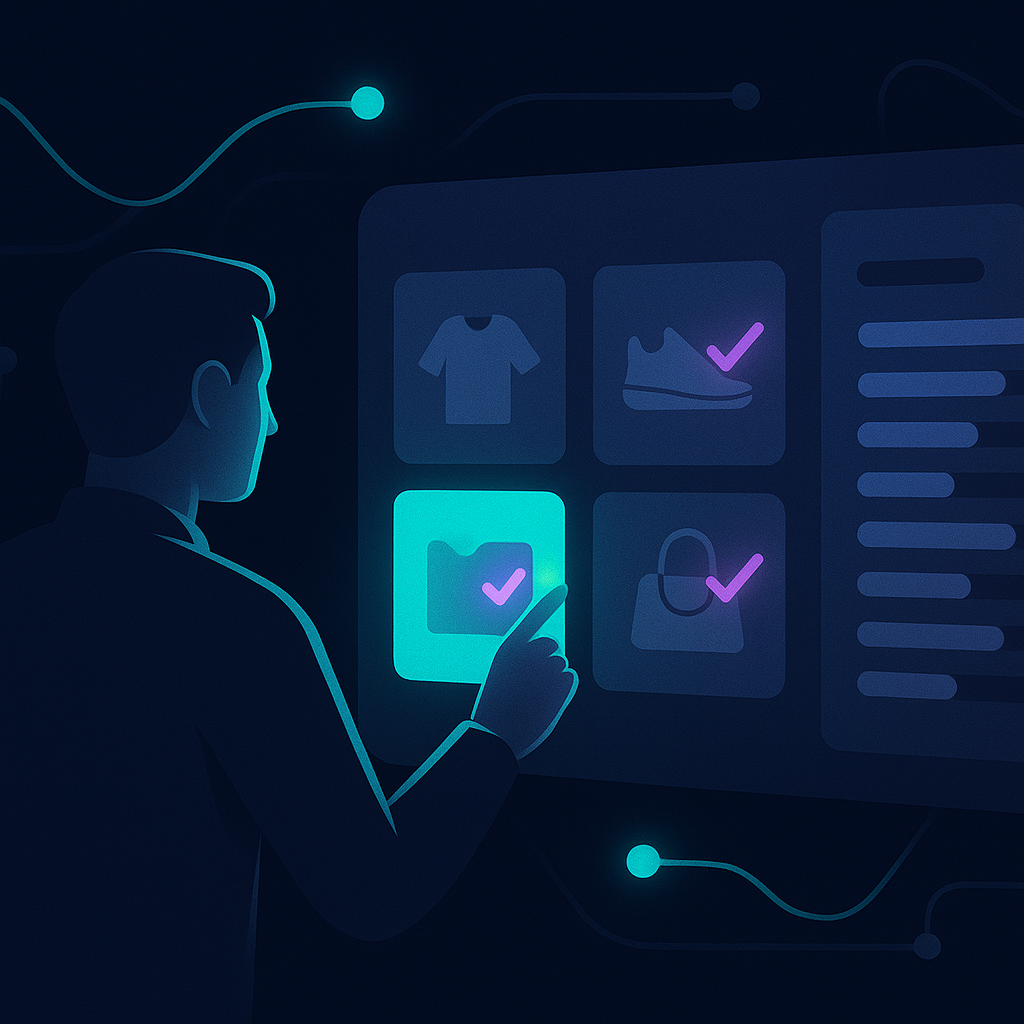
A focused ecommerce manager selecting a few hero products on a screen with a short competitor list, minimal cl

Turning tracking into an advantage

Tracking for its own sake is just watching. The advantage comes from what you do with the signal. When a competitor launches a promotion, you now have options you didn’t have when you found out late:

  • Match or beat it on a targeted set of products
  • Counter with a different offer — a bundle instead of a discount
  • Hold your price and lean on service, speed, or stock the rival lacks
  • Simply do nothing, knowingly, because it doesn’t threaten your margin

The best outcome is often restraint. Knowing a rival’s sale is small and short lets you skip a panic discount that would have cut your profit for no reason. Good tracking protects margin as much as it wins sales.

For an online shop with no in-house tech team, this is the realistic path: let automation handle the constant watching, keep the judgment for yourself, and turn competitor moves from surprises into decisions you make on your own schedule.

Want to see how competitor tracking and the rest of your store’s admin could run on autopilot? Let’s map your setup and put the watching, alerting, and follow-up on automation — so you get your week back.

Ready to see this working in your business?

Book a free automation walkthrough for your store

Want this working in your Automate Everything?

Book a free, no-obligation consultation, answer a few quick questions and we map exactly where you are losing clients, then show you the fix.

Get the next guide in your inbox

Plain-language automation guides for busy business owners. No spam, unsubscribe any time.

By subscribing you agree to our privacy policy. Unsubscribe any time.
FAQ · straight answers

Questions we hear every week

Ten honest answers before you book. Want more? See the full FAQ.

How fast can you build my complete automation system?

Most complete systems go live in about four weeks, and a single piece, just a website, or just lead-and-follow-up automation, can be live in one to two. The four weeks break into clear stages: a discovery week where we map exactly where your leads and revenue leak; a build week for the website and its content; a wiring week where the automation is connected on n8n to the tools you already use; and a launch week where every workflow is tested end to end before it ever touches a real customer. You review and approve at each stage, so nothing goes live that you haven't seen first. After the initial call you get an exact timeline for your specific setup, never a vague it-depends.

Do I own everything, or am I locked into your platform?

You own all of it, permanently. Every website, workflow, email sequence and automation is built inside your own accounts, your domain, your n8n instance, your CRM, your email platform, then handed over with full documentation at the end. There is no proprietary system you have to keep paying us to access, and no contract that traps you: if you ever want to move the work in-house or to another provider, everything goes with you. Ongoing support and new automations are available if you want them, but they are always optional and month-to-month, never a lock-in.

What does it cost to work with you?

Every business is different, so we do not publish fixed prices that would be wrong for half the people reading them. Instead, we look at your actual situation on a free consultation, agree the exact scope with you, and walk you through precisely what is involved, no hourly meter, no surprise invoices, and no pressure to decide on the spot. If you are weighing it up, the fastest way to a real answer is to book that free call and talk it through with an expert. You will leave knowing exactly what your business needs, with zero obligation.

Do I need any technical skills to run the system?

No, the whole point is that you do not become the IT department. We set everything up, connect it to your existing tools, and hand it over with a short plain-language walkthrough and written documentation. Day to day, your only real job is to approve things: a drafted social post, a new lead that arrived, a monthly report. The AI agents and n8n workflows quietly move data between your inbox, calendar, CRM and website in the background, and whenever you want to change something, we show you exactly where to click.

Which tools do you connect, and will I have to replace mine?

We connect the tools you already pay for rather than forcing a rip-and-replace, because migration is where most automation projects stall. In practice that means your website, n8n as the connective layer, and whatever you already use for email, CRM, calendar, booking, invoicing or your store, Shopify, HubSpot, Klaviyo, Google Calendar, common inboxes and many others. If a tool can send or receive data, it can almost always be wired in. On the rare occasion something genuinely cannot connect, we tell you before any work starts, along with the simplest alternative.

Will the automation feel robotic or impersonal to my customers?

It should not, and if it does then we have built it wrong. The goal is that a customer feels attended to faster than before, an instant, on-brand reply that carries your credentials and answers their actual question, not that they are obviously talking to a bot. Anything an AI agent drafts (a reply, a social post, a follow-up) can run through an approval step until its voice consistently matches yours, and the sensitive human moments always stay human. Done well, customers simply notice that you got back to them quickly and that nothing slipped through the cracks.

Is my data safe, and is everything GDPR-compliant?

Yes. We build on EU-hosted, consent-based tools and only move the data a workflow actually needs, rather than copying everything everywhere. Marketing consent, unsubscribe handling and data retention are set up correctly from the start, and you keep full ownership and control of every account. For medical, therapy and other regulated work there is a hard boundary we never cross: we build the marketing and new-enquiry layer only, and never touch patient portals, booking systems, intake forms or any records that fall under HIPAA-style or clinical-data rules, those stay entirely inside your own practice software.

What if I only need one thing, like a new website?

That is completely fine, and often the smartest way to start. Each of the five offers stands on its own, so you can take just the website redesign, just the lead-and-follow-up automation, or just the social layer, and add the others whenever you are ready. Because every piece is built to plug into the same system, nothing has to be rebuilt later, the website you buy today already has lead-capture wired to feed automation you might add next year. We will recommend the single highest-impact starting point for your situation, but the choice and the pace are always yours.

Do you write the content, or do I have to supply it?

We launch using the information, credentials, testimonials and proof you already have, and we structure and write the site copy, sequences and pages around it so it reads well and gets found. What we do not do is invent facts, fake reviews or unverifiable statistics on your behalf, your real proof is what builds trust, and that is what we work with. Ongoing content help (new guides, campaigns, social posts) is available as an option if you would rather not write it yourself, but it is never required to get the system live and working.

What happens after the system launches?

Launch is a handover, not an exit. You receive documentation for every workflow, a walkthrough of how it runs, and reporting that shows in plain language what is actually working, which channel produces enquiries, how fast leads are answered, what converted. From there you can run it entirely yourself, or keep us on an optional month-to-month basis for monitoring, tweaks and new automations as the business grows. Because you own everything, you are never stuck: support is there if you want it and gone the moment you do not.

Tell us where you are stuck

Book a free consultation

It starts with a quick, tick-box questionnaire, about two minutes. That is how we make sure the call is genuinely worth your time. Then you pick a slot in your own timezone.